Javelinas pace back and forth along the U.S.-Mexico border in the San Bernardino National Wildlife Refuge on Tuesday, July 22, 2025, in Cochise County, Ariz. For decades, conservationists have expressed concern about the impact a border wall would have on wildlife. Now, as the second Trump administration prepares to close some of the last gaps in the wall, conservationists say the effect will be devastating. (Photo by Marissa Lindemann/News21)

Vehicle barriers mark the border between the United States and Mexico in the San Rafael Valley, on Tuesday, July 8, 2025, in Santa Cruz County, Ariz. The valley is one of the state’s last unwalled sections of the border and a critical wildlife corridor for endangered species. In June, Homeland Security Secretary Kristi Noem waived multiple environmental laws to expedite construction of 24.7 miles of border wall here, which will replace the current vehicle barriers with a 30-foot-tall steel bollard wall. (Photo by Marissa Lindemann/News21)

Eamon Harrity, 36, a wildlife program manager for conservation nonprofit Sky Island Alliance, replaces the batteries for a camera trap in the San Rafael Valley on Monday, July 7, 2025, in Santa Cruz County, Ariz. The cameras are part of Sky Island Alliance’s Border Wildlife Study, which documents how wildlife is affected by border barriers across a 100-mile study area, including the San Rafael Valley and the San Bernardino National Wildlife Refuge, near Douglas, Arizona. (Photo by Marissa Lindemann/News21)

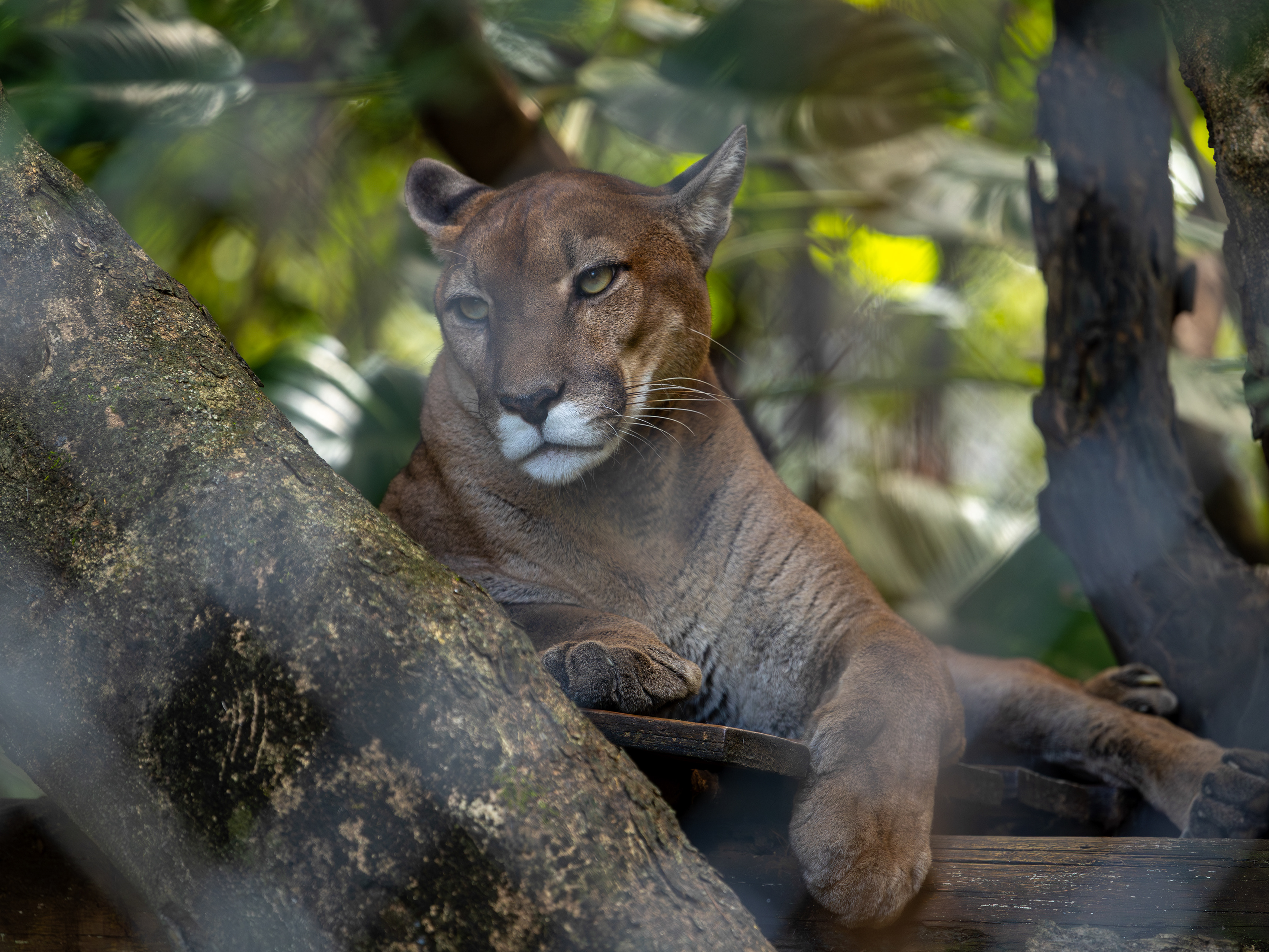
Eamon Harrity, 36, a wildlife program manager for Sky Island Alliance, checks a camera trap for images of wildlife in the San Rafael Valley on Monday, July 7, 2025, in Santa Cruz County, Ariz. Sky Island Alliance maintains 60 motion-activated cameras in the region that have documented species such as mountain lions, black bears and pronghorns crossing the U.S.-Mexico border. (Photo by Marissa Lindemann/News21)

A pronghorn is silhouetted against the Patagonia Mountains in the San Rafael Valley on Monday, July 7, 2025, in Santa Cruz County, Ariz. The San Rafael Valley is a biodiversity hotspot, meaning it has some of the greatest diversity of mammal species in North America. Animals like pronghorns, jaguars and black bears have migrated through this wildlife corridor for millennia to find water and food, and to look for mates. (Photo by Marissa Lindemann/News21)

Myles Traphagen, borderlands program coordinator with Wildlands Network, flies a drone to document the San Rafael Valley before border wall construction begins on Tuesday, July 8, 2025, in Santa Cruz County, Ariz. Traphagen, like many conservationists, knows that border wall construction is inevitable, but he continues to collect data, as it was useful for establishing wildlife passages during earlier construction of the border wall. (Photo by Marissa Lindemann/News21)

Myles Traphagen, borderlands program coordinator with Wildlands Network, stores his drone after flying it across a stretch of the U.S.-Mexico border in the San Rafael Valley on Tuesday, July 8, 2025, in Santa Cruz County, Ariz. “What happens is people, they grow into their environments, and then the next generation that comes around has no idea of what things were like – that it used to be better, that it used to be more intact,” he said. (Photo by Marissa Lindemann/News21)

Myles Traphagen, borderlands program coordinator with Wildlands Network, measures the distance between vehicle barriers and a ring of wooden stakes that mark the Roosevelt Reservation — a 60-foot strip of federal land along the U.S.-Mexico border — on Tuesday, July 8, 2025, in Santa Cruz County, Ariz. In his 25 years working along the border, Traphagen has seen border markers evolve from obelisks and vehicle barriers to these pink ribbons, which show where border wall construction will soon begin. (Photo by Marissa Lindemann/News21)

A road runs parallel to the border wall through the San Bernardino National Wildlife Refuge on Tuesday, July 22, 2025, in Cochise County, Ariz. A wildlife study by Sky Island Alliance found that places with steel bollard walls, like the San Bernardino refuge, reduced animal border crossings by 86% compared to places with vehicle barriers, like the San Rafael Valley. (Photo by Marissa Lindemann/News21)

As part of Sky Island Alliance’s border wildlife study, a camera trap is situated at the front of a small wildlife opening in the San Bernardino National Wildlife Refuge on Tuesday, July 22, 2025, Cochise County, Ariz., to record animals that use the passage. as part of Sky Island Alliance’s Border Wildlife Study on Tuesday, July 22, 2025, Cochise County, Ariz. These small wildlife openings — which widen the 4-inch gaps between posts to 8.5 inches — can increase wildlife movement by 16.7 times for species like bobcats, coyotes, javelinas and female mountain lions. (Photo by Marissa Lindemann/News21)

Eamon Harrity, 36, wildlife program manager for Sky Island Alliance, looks at photos from camera traps at the Sky Island Alliance office on Monday, July 7, 2025, in Tucson, Ariz. Conservation nonprofits like Sky Island Alliance and Wildlands Network have been working to convince the Department of Homeland Security to install more wildlife passages along the border wall, something they’re hopeful can be done in the San Rafael Valley when the wall is built there. (Photo by Marissa Lindemann/News21)

A deer pokes its head through the border wall into Mexico after searching for a spot to cross in the San Bernardino National Wildlife Refuge on Tuesday, July 22, 2025, in Cochise County, Ariz. While small wildlife passages have helped some animals, larger species – like mule deer, white-tailed deer, black bears and wild turkeys – are unable to cross, leaving them separated from water, food, shelter and mates on the other side of the wall. (Photo by Marissa Lindemann/News21)

Along the Arizona-Mexico border, barbed wire spans the Santa Cruz River at its headwaters in the San Rafael Valley on Monday, July 7, 2025, in Santa Cruz County, Ariz. The Santa Cruz is a binational river that crosses the U.S.-Mexico border twice. Both ends are important ecological corridors, because the river is one of the last remaining places where wildlife can easily cross for hundreds of miles.

A bridge frames open floodgates in San Bernardino National Wildlife Refuge on Monday, July 21, 2025, in Cochise County, Ariz. These floodgates are a model for what border wall construction over the Santa Cruz River could look like, but conservationists worry that the perennial flow of the river, combined with monsoon rains, could cause debris to build up behind the floodgates – leading the river to rip the gates off and causing catastrophic damage downstream. (Photo by Marissa Lindemann/News21)

Michael Bogan, 48, an ecologist with the University of Arizona, conducts a dragonfly and damselfly survey along the Santa Cruz River on Tuesday, July 8, 2025, in Marana, Ariz. Bogan, along with other University of Arizona experts, is part of a local effort to have portions of the Santa Cruz River added to the U.S. Fish and Wildlife Service's National Wildlife Refuge System. (Photo by Marissa Lindemann/News21)

Scully Young, 22, a lab technician with Michael Bogan’s Aquatic Ecology Lab, takes a photo of a damselfly during a dragonfly survey in the Santa Cruz River on Tuesday, July 8, 2025, in Marana, Ariz. The goal of Bogan’s lab is to document the biodiversity value of putting water back into the Santa Cruz River and to get the local community invested in protecting the river. (Photo by Marissa Lindemann/News21)

An American rubyspot damselfly is silhouetted against the Santa Cruz river on Tuesday, July 8, 2025, in Marana, Ariz. (Photo by Marissa Lindemann/News21)

Scully Young, 22, left, and Michael Bogan, 48, right, record their findings from a damselfly and dragonfly survey in the Santa Cruz River on Tuesday, July 8, 2025, in Marana, Ariz. Bogan said that while he doesn’t want to see border wall construction upstream, he has to prioritize what he can conserve. “There are just so many threats that demand our time right now – whether it's defunding of the Park Service or selling public lands or eradicating the effectiveness of the Endangered Species Act.” (Photo by Marissa Lindemann/News21)

Eamon Harrity, a wildlife program manager for Sky Island Alliance, walks his bike away from the Sky Island Alliance office on Monday, July 7, 2025, in Tucson, Ariz. Even though the future of the San Rafael Valley is uncertain, Harrity says that even after the border wall is finished, cameras will remain to document the impacts on wildlife. (Photo by Marissa Lindemann/News21)

A family of javelina, also called a squadron, uses a small wildlife passage to cross from Mexico into San Bernardino National Wildlife Refuge, where they drink from a pool of water on Tuesday, July 22, 2025, in Cochise County, Ariz. (Photo by Marissa Lindemann/News21)
This project was created as part of Carnegie-Knight News21, housed at ASU's Walter Cronkite School of Journalism and Mass Communication. The program selects 21 top journalism students from colleges across the U.S. to report on the most important issues of our time. The project for 2025 is “Upheaval Across America,” an examination of immigration enforcement under the second Trump administration.
Lindemann supported five of the project's stories with her photography and she also created a photo story entitled, "The last corridor: How conservationists are protecting wildlife in Arizona’s San Rafael Valley amid border wall construction." You can view the essay and project by clicking the buttons below.