A view of the thick rainforest vegetation in the Tirimbina Reserve on Sunday, Nov. 23, 2025, in La Virgen, Sarapiquí, Costa Rica. La Tirimbina Biological Reserve protects 345 hectares of tropical rainforest and is home to more than 3300 species of plants and animals. (Photo by Marissa Lindemann)

A male jaguar sleeps on a rock ledge in La Paz Waterfall Gardens on Sunday, Nov. 16, 2025, in Sarapiquí, Costa Rica. The jaguar is listed as “near threatened” on the International Union for Conservation of Nature (IUCN) red list. The mission of La Paz, a nature park and wildlife refuge, is to preserve and protect the natural environment for education, entertainment, and enjoyment for all. (Photo by Marissa Lindemann)

A white-whiskered puffbird, Malacoptila panamensis, perches on a branch in Carara National Park on Saturday, Nov. 8, 2025, in Tarcoles, Costa Rica. Carara National Park was first established as a biological reserve in 1978 and then became a national park in 1998. “Carara” comes from the indigenous peoples who lived in the area, meaning “river of crocodiles.” (Photo by Marissa Lindemann)

Burnt orange and brown leaves gather underfoot at Spirogyra Butterfly Garden on Thursday, Nov. 26, 2025, in San José, Costa Rica. (Photo by Marissa Lindemann)

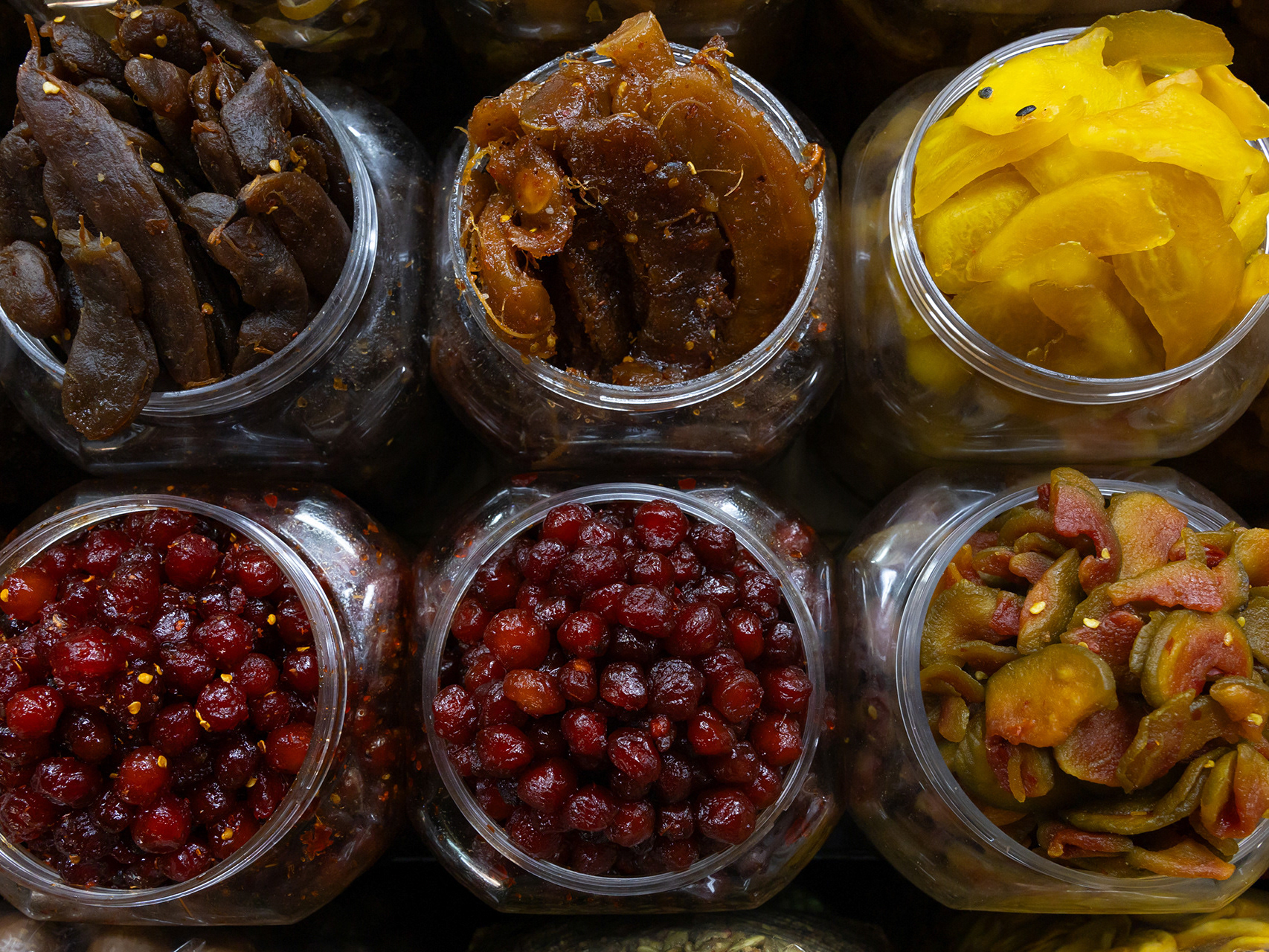
Pink and golden beans overflow from a stall at the farmer’s market on Sunday, Nov. 9, 2025, in San José, Costa Rica. (Photo by Marissa Lindemann)

Larvae of an owl butterfly rest on a banana leaf at Spirogyra Butterfly Garden on Tuesday, Oct. 7, 2025, in San José, Costa Rica. These larvae are found throughout Mexico, Central America, and South America. The larval stage of their lives lasts around two months, before they pupate and eventually emerge as a butterfly. (Photo by Marissa Lindemann)

A keel-billed toucan, or Ramphastos sulfuratus, shakes water from its beak after a long drink at Centro de Rescate Las Pumas on Sunday, Nov. 15, 2025, in Guanacaste Province, Cañas, Costa Rica. Las Pumas accepts thousands of animals a year and has succeeded in returning 50% to the wild. This toucan is one of the few that is unable to be released to the wild, and will live the rest of its life at the sanctuary. (Photo by Marissa Lindemann)

A puma, also known as a mountain lion or cougar, lounges in a tree at Centro de Rescate Las Pumas on Sunday, Nov. 15, 2025, in Guanacaste Province, Cañas, Costa Rica. This puma, Bruno, used to be kept in captivity and became too accustomed to humans to be safely returned to the wild. (Photo by Marissa Lindemann)

A dead owl butterfly rests atop a tangle of roots at Spirogyra Butterfly Garden on Tuesday, Nov. 4, 2025, in San José, Costa Rica. Spirogyra Butterfly Garden breeds approximately 20 different species of butterflies and exports many to other independent breeders throughout Costa Rica. (Photo by Marissa Lindemann)

A hummingbird perches for a moment on a mint plant inside Spirogyra Butterfly Garden on Tuesday, Oct. 7, 2025, in San José, Costa Rica. The garden, founded in 1992, was created to help preserve the property located in the Rio Torres bio-corridor, which includes the secondary forest and riverbank the garden is built alongside. (Photo by Marissa Lindemann)

Smoke billows from the crater of Poás Volcano on Saturday, Sept. 13, 2025, in Alajuela Province, Alajuela, Costa Rica. Poás Volcano is an active 2,697-metre stratovolcano and has erupted 40 times since 1828. Its last strong eruption was in April 2017, causing residents and visitors to evacuate. (Photo by Marissa Lindemann)

The sun rises over a town on the edge of the Monteverde forest on Sunday, Nov. 16, 2025, in Punterenas Province, Costa Rica. (Photo by Marissa Lindemann)

A dancer in the “Banda Municipal De San José” group twirls her skirt during the Independence Day parade on Monday, Sept. 15, 2025, in San José, Costa Rica. The parade lasted more than three hours, featuring traditional dances, marching bands, and other celebrations to mark Independence Day. (Photo by Marissa Lindemann)

A father hoists his daughter up on his shoulders to watch the Independence Day fireworks display that erupts from the Cartago ruins on Sunday, Sept. 14, 2025, in Cartago, Costa Rica. Costa Rica, along with the entirety of Central America, gained independence from Spain in 1821, but the news didn’t reach Costa Ricans until a month after the declaration in Guatemala. (Photo by Marissa Lindemann)

An Independence Day lantern emits an orange glow on Sunday, Sept. 14, 2025, in Cartago, Costa Rica. The night before Independence Day in Costa Rica is celebrated with "Desfile de Faroles,” or a lantern parade. Children will make lanterns in school to symbolize the light of freedom. (Photo by Marissa Lindemann)

The Basílica de Nuestra Señora de los Ángeles, a historic Catholic church, empties after the Independence Day mass on Sunday, Sept. 14, 2025, in Cartago, Costa Rica. (Photo by Marissa Lindemann)

A Fer De Lance, Bothrops asper, coils itself up under a log in the Tirimbina Reserve on Saturday, Nov. 22, 2025, in La Virgen, Sarapiquí, Costa Rica. The Fer De Lance is considered the most dangerous snake in Central and South America. Their bite causes more human deaths than any other American reptile. However, the majority of snake bites occur when humans try to capture, handle, or kill snakes. (Photo by Marissa Lindemann)

A spiderweb stretches between three supporting pillars on a hanging bridge in the Cloud Forest on Sunday, Oct. 26. 2025, in Monteverde, Costa Rica. (Photo by Marissa Lindemann)

The sun rises over Montezuma Beach on Friday, Nov. 28, 2025, in Montezuma, Costa Rica. (Photo by Marissa Lindemann)

A walking stick bug, order Phasmatodea, perches on a leaf in the Tirimbina Reserve on Saturday, Nov. 22, 2025, in La Virgen, Sarapiquí, Costa Rica. Stick bugs have some of the most incredible camouflage on earth, staying motionless during much of the day and emerging at night to eat leaves. Each organ is elongated to fit its cylindrical shape, and its exoskeleton can be brown or green to match the natural vegetation and hide it from predators. (Photo by Marissa Lindemann)

Termites swarm two broad, green leaves, near the rainforest forest floor in order to establish a new colony in the Tirimbina Reserve on Saturday, Nov. 22, 2025, in La Virgen, Sarapiquí, Costa Rica. Termites are usually considered pests by humans, but they provide several invaluable ecological functions by decomposing dead wood and leaves. The decomposition process recycles essential nutrients, including carbon and nitrogen, back into the soil and improves soil structure. Termites also protect rainforests from climate change by keeping the soil moist and helping seedlings survive, especially during droughts. (Photo by Marissa Lindemann)

A pair of red-eyed tree frogs engage in Amplexus, or the nuptial hug, in which the male clasps the female to externally fertilize the eggs as she lays them on a leaf in the Tirimbina Reserve on Saturday, Nov. 22, 2025, in La Virgen, Sarapiquí, Costa Rica. The Tirimbina Biological Reserve has made a concentrated effort to protect these frog populations by creating artificial ponds throughout the reserve for the breeding frogs to populate. (Photo by Marissa Lindemann)
This portfolio was compiled during my semester abroad in Costa Rica. I took over 15,000 photos and visited more than a dozen locations across the country- from the Monteverde Cloud Forest to the black sand beaches of Puerto Viejo. This experience was life-changing, allowing me to closely connect with one of the most sustainable and biodiverse countries in the world. While my photography covered a range of subjects, I felt moved by the environmental stories I had the opportunity to create. I got to learn up close about what conservation looks like in Costa Rica and how ticos are fighting to protect their natural spaces.
If you'd like to see more of my work from Costa Rica, click the buttons below to see my featured blog posts from my work as a photo blogger for WorldStrides, my study abroad program.